How to Choose a Lemon Vibrator When Clitoral Sensitivity Varies Month to Month
One week your clitoris craves intense stimulation. Two weeks later, the same intensity feels like too much. Here's how to navigate unpredictable sensitivity with the right lemon vibrator technique.
Let's be real: your sensitivity is not the same every day. Some weeks you want maximum stimulation. Other weeks, direct contact feels almost painful. You're not broken. Your clitoris is responding exactly as it should to hormonal fluctuations, stress levels, medication changes, and your nervous system's state.
The problem most people run into is treating their lemon vibrator like it has one job. You buy it, use it at one intensity, and assume that's it. But the best part of choosing a lemon vibrator for variable sensitivity is that these tools are specifically designed to meet your clitoris wherever it is on any given day.
Three main drivers change how much stimulation feels good:
Hormonal cycle. Around ovulation, your clitoris engorges slightly as estrogen peaks. This means more direct stimulation often feels amazing. Post-ovulation, during the luteal phase, progesterone rises and tissue sensitivity typically decreases. Some people find they need less pressure or shorter sessions. Others find they need more stimulation to reach the same plateau. There's no "normal" here, just your pattern.
Stress and nervous system state. When you're in fight-or-flight mode, your parasympathetic nervous system is offline. That means arousal builds slowly, and direct clitoral stimulation can feel sharp instead of pleasurable. When you're calm and regulated, your nervous system is in rest-and-digest mode. The same vibrator intensity that felt too much yesterday now feels exactly right.
Medication and health variables. Antidepressants, birth control changes, thyroid medication, and blood pressure meds all affect genital sensation. If you've recently started or changed medication, your sensitivity baseline has likely shifted. This is not permanent, but it's real, and adjusting your lemon vibrator technique can bridge the gap while your body adapts.
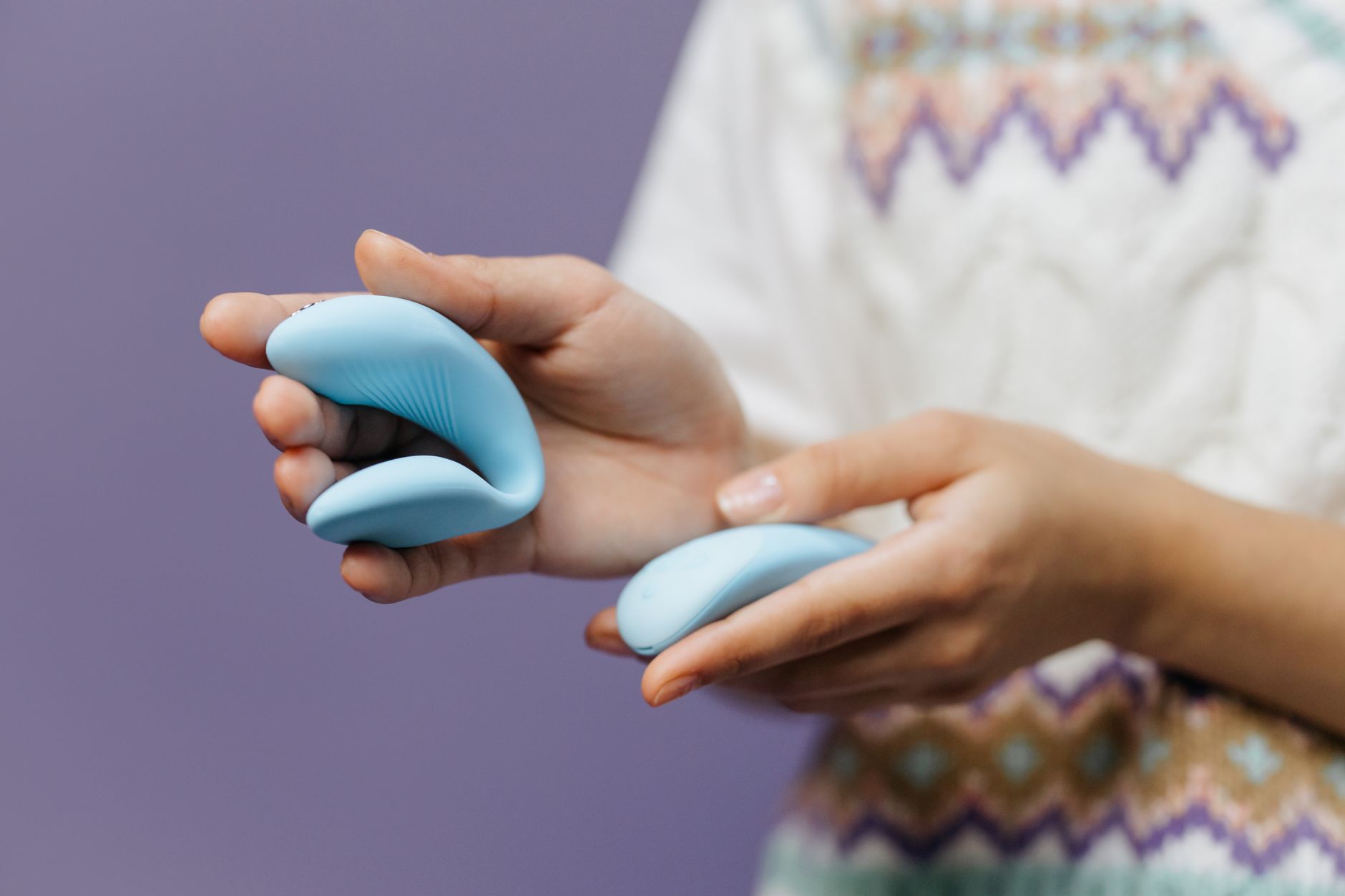
Unlike traditional vibrators that deliver rapid up-and-down or side-to-side motion, suction-based clitoral vibrators like the Lem work with a pulsing pressure wave. This matters enormously for variable sensitivity.
When you're in a low-sensitivity phase, you can use a lower pattern setting (think 1 through 3) and build from there. The suction creates stimulation without the harsh friction of traditional vibrators. When you're in a high-sensitivity phase, you can either use a higher pattern (5 through 9) or keep it lower and adjust positioning. You have control in a way that traditional vibrators don't offer.
The seal of the lemon vibrator is also key. If sensitivity is high, you can create a looser seal by angling the head slightly away from direct contact. If you want more intensity, you deepen the seal. This micro-adjustment isn't possible with most vibrators.
Here's what I recommend to clients who struggle with unpredictable sensitivity: track it for one month.
You don't need an app or a spreadsheet. Just note on your calendar what day of your cycle you're on and how stimulation felt that day. Was the lowest setting on your lemon vibrator perfect? Did you want to go higher? Did direct contact feel too intense?
After one month, patterns usually emerge. You might notice that days 12-16 of your cycle feel very different from days 22-26. Or you might discover that stress is a bigger driver than your cycle. Some people find that a certain medication they take at night affects the next day's sensitivity.
Once you know your pattern, you can plan. If you know high-sensitivity days are coming, you can keep your patterns lower and focus on longer warm-up time instead. If you know you'll want more intensity in two weeks, you can budget time for a longer session when your nervous system has more resources.
Four anchors work regardless of where you are in your sensitivity cycle:
Start lower than you think you need. If your lemon vibrator has patterns 1-9, assume you'll start at 2 or 3, not 4. You can always increase. You can't unring the bell if you've overstimulated sensitive tissue.
Warm up longer on low-sensitivity days. Sensitivity shifts often mean arousal builds more slowly. Spend 10-15 minutes on patterns 1-3 before moving up. This gives your clitoris time to engorge and your nervous system time to fully settle into pleasure.
Use angle and seal as intensity adjusters. You don't have to increase the pattern number to increase sensation. Shifting how you position the lemon vibrator's head (more direct seal vs. angled) changes the intensity without touching a button. This is wildly underutilized.
Build breaks into longer sessions. If you're having a low-sensitivity day, stopping for 30-60 seconds every few minutes actually increases pleasure. This breaks the habituation cycle. Your clitoris gets a tiny reset, and the next round feels fresh. High-sensitivity days usually don't need this, but don't assume.
Sensitivity shifts month to month are normal. But if sensitivity has completely flatlined and isn't returning, or if it's gotten progressively worse over months, check with a healthcare provider. This can signal:
Hormonal changes that need medical attention (thyroid, estrogen, progesterone).
Medication side effects that can sometimes be managed by adjusting dose or timing, or switching to something else.
Pelvic floor tension that's suppressing sensation. This is incredibly common, especially in people with high stress or trauma history. A pelvic floor physical therapist can help.
None of these are emergencies, but they're worth addressing. In the meantime, adjusting your lemon vibrator approach can help bridge the gap.
Here's the part nobody talks about: your preferences will shift, and that's fine. What felt incredible last month might not land the same way this month. Your lemon vibrator isn't the problem. Your body isn't broken. You're just listening to what you actually need instead of trying to force yesterday's desire.
I've worked with countless people who felt guilty that their sensitivity was "unpredictable." They thought variability meant something was wrong. Instead, variability is your body being honest about what it's experiencing.
Use those lower patterns. Linger in warm-up. Shift the angle. Your pleasure is worth the two minutes it takes to find what works right now, today, in this moment. That's not indulgence. That's self-respect.
Normal sensitivity shifts are tied to your cycle, stress level, medication, or sleep. They fluctuate but don't get progressively worse. If your sensitivity has flatlined completely for more than two months, or if it's been declining steadily even though nothing obvious has changed, mention it to your doctor. Most of the time it's manageable, but it's worth checking out.
Not usually permanently, but they do affect sensitivity while you're taking them. Many people find that after 6-12 weeks of adjusting to a new medication, their baseline returns. In the meantime, longer warm-up and lower intensity settings on your lemon vibrator help bridge the gap. If sensitivity hasn't improved after three months, switching medication is worth discussing with your prescriber.
That's usually a sign of nervous system dysregulation, not a vibrator problem. If you're running on low sleep, high stress, or both, your parasympathetic nervous system goes offline. Try settling for 10-15 minutes before play. Breathwork, gentle movement, or just lying down quietly can flip your nervous system back into rest-and-digest mode. Sensitivity usually returns once you're regulated.
No. Using your clitoral vibrator doesn't dull sensitivity permanently. But yes, you can overstimulate in the moment. If you use high patterns for a long time, your clitoris might feel numb immediately after. Rest for an hour and sensation returns. If you're consistently overstimulating, scale back intensity and duration, and you'll notice improvement within a few days.
Stick with what feels good in the moment. There's no rule saying you have to explore higher patterns. If pattern 3 or 4 on your lemon vibrator is exactly right, that's your answer. Some people do enjoy variety, and mixing patterns (two minutes on pattern 4, shift to pattern 6, back down to 3) keeps sensation fresh. But there's zero benefit to forcing yourself into higher intensity just because it exists.
Normal post-play numbness is immediate and mild, and sensation returns within 30-60 minutes. You just finished an intense session, so of course your clitoris is tired. Overstimulation feels more intense, includes soreness or tenderness, and can linger for hours. If you're experiencing that, you've gone too high or too long. Lower your pattern, shorten sessions, and increase warm-up time. Your clitoris will bounce back.
Several excellent peer-reviewed studies support the connection between menstrual cycle phase and genital sensitivity. Research published in the Archives of Sexual Behavior demonstrates variability in clitoral responsiveness across the menstrual cycle, with peak sensitivity often correlating with follicular phase hormone profiles. Additionally, neuroscience research on the sympathetic nervous system confirms that stress-induced parasympathetic withdrawal measurably reduces genital blood flow and sensation acuity.
If you're navigating sensitivity changes tied to medication, relationship dynamics, or body changes, the full team at Official Lemon Vibrator is here. Get in touch to ask questions about your specific situation.