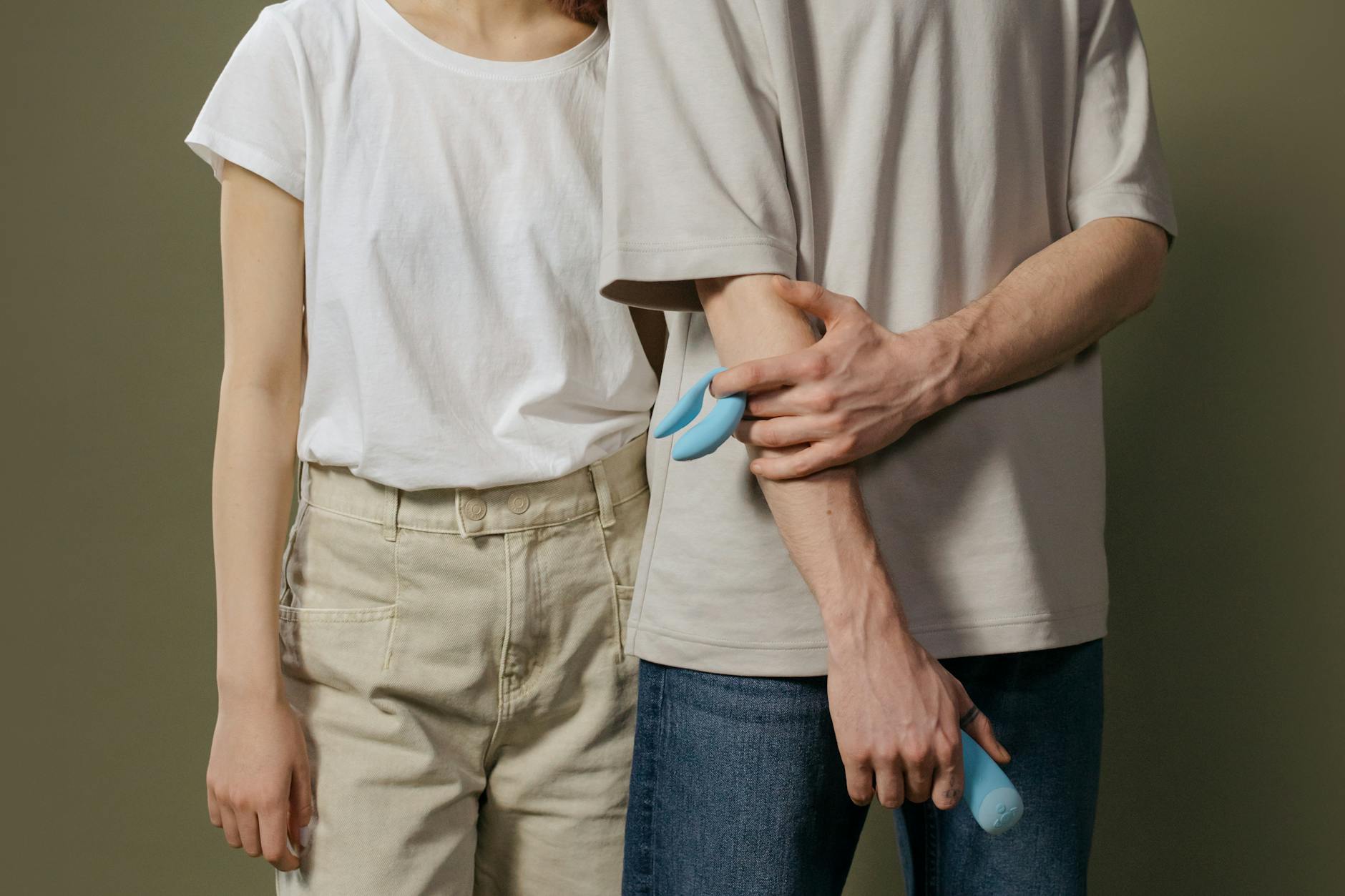
Lemon Vibrator for Menopause, Vaginal Dryness, and Thin Tissue
Your hormones are shifting, your tissues are changing, and your pleasure is absolutely still possible. Here's how lemon clitoral vibrators work when menopause changes everything.
Your estrogen is dropping. That's real. Your vaginal tissue is getting thinner and drier. Also real. But here's what gets buried in the clinical language: the clitoral nerve density doesn't change, your brain's capacity for arousal stays intact, and your ability to have intense, satisfying orgasms isn't going anywhere. What changes is the delivery system, not the destination.
Menopause rewrites the rules of physical pleasure, but it doesn't revoke your membership. The lemon clitoral vibrator is specifically designed to work WITH the tissue changes that happen during this transition. Let me walk you through why.
When estrogen drops, the vaginal epithelium (the inner lining of the vagina) gets thinner. The tissue loses some of its elasticity and natural lubrication. Blood flow to the genitals can slow down, which means arousal takes longer to build. The vulva might feel less plump, the vagina less self-lubricating. This is genitourinary syndrome of menopause (GSM), and it's wildly common. Studies suggest somewhere between 40 and 60 percent of postmenopausal people experience it.
But here's what's crucial: thinning tissue and reduced lubrication are physical changes to manage, not signs that pleasure is over.
The clitoris is mostly internal nerve endings wrapped around a small external bundle. Menopause doesn't shrink the nerve density or dull the neural pathways. What it changes is how quickly the tissue swells and how much natural lubrication is available.
A lemon vibrator works here because suction-based stimulation (the technology that Hello Nancy's Lem uses) doesn't require the same kind of friction that traditional vibration does. Instead of relying on sustained moisture and tissue plumpness, suction gently draws the clitoral tissue, simulating the sensation of oral sex without needing the same level of natural lubrication or tissue thickness. This is a completely different biomechanical experience than a standard vibrator.
For people with thinning vaginal tissue, that difference is transformative. You get full pleasure without the friction that can feel uncomfortable or irritating on more delicate tissue.
Think about what happens during oral sex. The tongue doesn't just vibrate. It creates rhythmic suction and release. That suction is incredibly effective at stimulating the clitoris because it engages the entire structure, not just the surface.
When you use a lemon sucker vibrator like the Lem, you're replicating that suction mechanic. The device gently oscillates around the clitoris, creating rhythmic waves of suction that feel richer and more textured than simple vibration. For someone whose tissue is thinner and more sensitive, this is genuinely easier on the body.
The other advantage: you control the intensity directly. Starting at pattern 1 or 2 on the Lem lets you build sensation gradually without that early intensity that can feel overwhelming when tissue is delicate.
Even with a clitoral vibrator that doesn't require heavy friction, water-based lubricant becomes non-negotiable during menopause. Not because you're broken, but because thinner tissue benefits from the added glide.
Apply it generously. There's no such thing as "too much" when you're managing vaginal dryness. A good water-based formula (avoid silicone lubes with silicone-based toys, though a silicone lube works fine with the Lem's silicone body) reduces friction, increases comfort, and actually helps your body warm up faster. Arousal triggers natural lubrication production, but during menopause that cycle is slower. External lube bridges that gap.
Many of my clients find that adding lube transforms the experience from "okay, I can do this" to "yes, actually, this is really good." The difference is often that simple.
Arousability doesn't disappear during menopause. But the timeline does shift. Where you might have built arousal in 5 to 10 minutes at 35, you might now need 15 to 25 minutes at 55. That's not a problem if you expect it and plan for it.
Start with touch. Stroking the inner thighs, the labia, the vulva. Let your hands spend time exploring without the vibrator. Once you feel warmth and some initial swelling, add the Lem. Begin on the lowest pattern. Let your body spend 5 to 10 minutes at that baseline. Then explore the next pattern up.
This isn't slow in a frustrating way. It's slow in the way that builds genuine sensation. Many of my clients report that their most intense orgasms happen after this kind of gradual warm-up.
If vaginal dryness is severe or if thin tissue is causing pain during penetration, topical vaginal estrogen is worth discussing with your GP. Creams like Estrace or Vagifem deliver estrogen directly to the tissue without significant systemic absorption. Many people see improvement in tissue thickness and lubrication within 2 to 3 weeks.
The combination of topical estrogen and a clitoral vibrator can be particularly effective. The estrogen helps restore some tissue integrity, and the lemon sucker provides stimulation without friction. If systemic hormone therapy is part of your menopause plan, that also improves blood flow and tissue health over time.
But here's what I want to be clear about: you don't need medical intervention to have good sex or good orgasms. Many people have deeply satisfying experiences with lube, the right vibrator, and permission to take time.
Estrogen loss affects the pelvic floor muscles. They get less support, can become tighter and less flexible. This changes how orgasms feel. Some people find them more concentrated. Some find them less intense. Some find they're harder to trigger.
This is worth paying attention to, but not in the "go do 50 Kegels a day" way you've probably heard. Kegels (contracting the pelvic floor) are useful, but equally important is learning to relax the pelvic floor completely. Many people find that tension in this area actually prevents good orgasms.
A simple practice: before you use the Lem, spend 2 to 3 minutes consciously relaxing your pelvic floor. Breathe deeply. Imagine the muscles softening and releasing. Then when you use the vibrator, notice whether tightening or releasing feels better. You'll often find that a more relaxed pelvic floor lets the sensation travel more richly through the whole area.
Menopause often arrives with other life chapters closing or shifting. Children might be moving out. Career changes happen. Relationships are renegotiating new rhythms. Grief is real and often underestimated.
What gets confusing is when you assume all changes in your pleasure are purely hormonal. Sometimes they are. Sometimes a shift in desire or sensation is actually about needing to reconnect with yourself or your partner, or about processing a life transition that feels bigger than your body.
If you're working with a partner, this is worth naming explicitly. "My body is responding differently" is a completely different conversation than "I want us to rebuild intimacy together." Separating those two topics means you can actually address both, instead of conflating them and getting stuck.
For solo exploration, menopause can actually be a doorway to deeper pleasure. The cognitive load of hormonal cycling lifts. The pressure to perform for anyone else softens. Many of my clients find that menopause is the first time they've really explored their own bodies without distraction.
If pain is showing up during sex, don't wait this one out. Pain is signaling that something needs to shift. Talk to a menopause-trained GP or gynaecologist. GSM is treatable, usually within weeks.
If desire has genuinely tanked and isn't returning with time and good lube and exploration, testosterone therapy is worth discussing with a specialist. Testosterone is prescribed conservatively in the US but more readily available in the UK and Australia. For the right person, it can be genuinely transformative.
If you're feeling disconnected from your partner or from sexuality itself, a therapist who specializes in menopause or sex therapy can help you untangle what's hormonal, what's relational, and what's actually just grief or burnout that needs tending.
Menopause changes the mechanics. It doesn't end the story. Your clitoris still works. Your nerve endings are still there. Your brain still lights up with pleasure. What changes is the pace and the path. A lemon clitoral vibrator is engineered specifically to work with that new path, not against it.
The best orgasms of your life might actually be ahead of you. Plenty of people report exactly that. Not in a polite, everything-is-fine way, but as a genuine clinical observation. When you combine more time for warm-up, less distraction, good lube, and a vibrator designed for your tissue, something really good often emerges.
Yes. Vaginal atrophy (now called genitourinary syndrome of menopause) makes the tissue thinner and more sensitive. A lemon clitoral vibrator's suction-based design is actually ideal for this situation because it doesn't rely on friction. You'll want to use lube, start on the lowest setting, and take time warming up. If the tissue is so delicate that even gentle stimulation causes pain, talk to your doctor about topical estrogen first. But many people with moderate atrophy have great results with a clitoral sucker vibrator right away.
Start generous. Apply a nickel-sized amount to the vulva and a bit more to the Lem tip. As you use the vibrator, it'll mix and disperse. You can always add more, but you can't easily remove it. During menopause, more lube is almost always better. It reduces friction, increases comfort, and actually helps your body warm up faster because arousal is easier when you're not managing dryness.
Yes. The thinner tissue means you'll feel sensation more directly and sometimes more intensely. This is why starting on pattern 1 is important. You might find that patterns you'd use easily at 40 feel too strong at 60. That's not a decline. That's just different tissue. It often means the sensation is actually richer and more concentrated.
Take time warming up first. Spend 10 to 15 minutes with manual touch before you turn on the vibrator. Use plenty of lube. Start with the tip hovering near (not directly on) the clitoris. Some people find that indirect stimulation feels better when tissue is sensitive. You can also try short bursts. Five seconds on, five seconds off. This gives your nervous system time to calibrate.
Completely. Hormone therapy helps restore some tissue health and blood flow, which often makes sensation better. Many of my clients use a lemon clitoral vibrator alongside topical estrogen or systemic HRT and find the combination works beautifully.
Start with 2 to 3 times a week. Give your tissue time to recover between sessions. As your body adjusts and you see improvement in tissue health (often 4 to 8 weeks in), you can increase frequency if you want. Pay attention to how you feel. If you're sore afterward, dial back the frequency or intensity. Pleasure should feel good during and after.
Menopause rewrites your body's pleasure script, but it doesn't close the book. Your clitoris is still there. A lemon sucker vibrator is specifically engineered to work with the tissue changes that menopause brings, using suction instead of friction to deliver sensation. Add lube, take time to warm up, and stay patient with your body's new rhythm. Many people find that this phase of life, with the right tools and information, brings some of their best sexual experiences.
If you're navigating menopause and pleasure feels complicated, we're here to help. Reach out anytime at /contact.