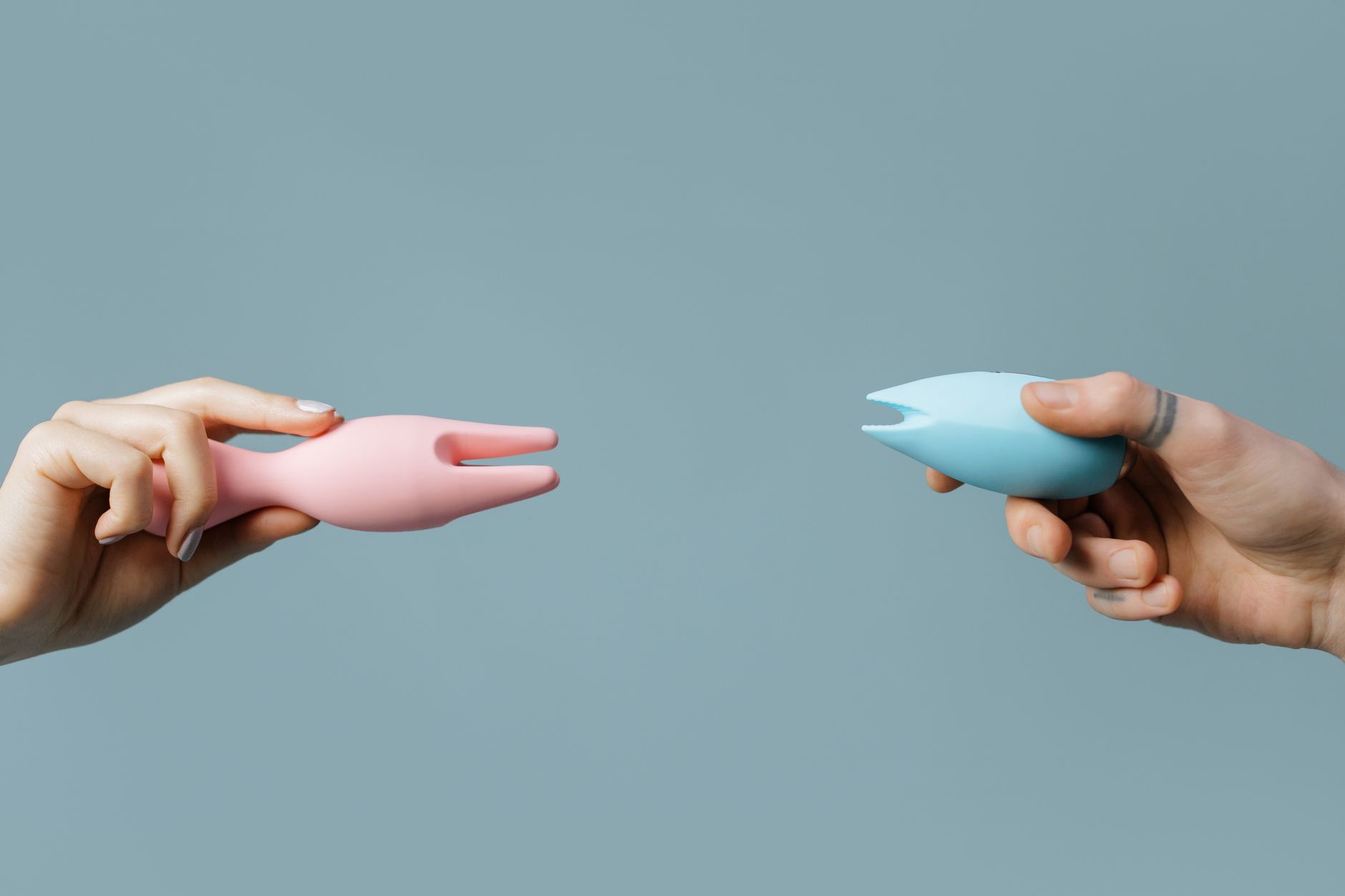
You want a lemon vibrator. Your partner doesn't. This isn't actually a conversation about a toy. It's a conversation about insecurity, identity, control, and what you're both allowed to want. Understanding the difference matters because it changes how you approach this entirely.
Most partners who resist vibrators fall into one of three camps: they believe the toy will replace them, they think it means the relationship isn't enough, or they've internalized some old messaging that toys are for people whose partners have "failed" them. None of those are true, and none of them are unsolvable. But pretending the resistance is just about the toy itself will burn your goodwill and theirs.
Here's a stat that matters: couples who use vibrators together report higher sexual satisfaction and lower rates of infidelity in longitudinal studies. The tool doesn't replace the person. It supplements the experience. Vibrators also make orgasms more reliably achievable for people with vulvas, which means less performance pressure on both partners. That's the opposite of a threat. That's an upgrade.
But data doesn't change emotions. Your partner's resistance probably isn't rational. It's felt. So you have to start there.
Wrong opening: "I want to use a vibrator. I need more stimulation." This reads as "you're not enough," even if that's not what you mean.
Wrong opening: "Everyone uses toys now. It's normal." This feels like pressure. It's not reassuring. It's shaming.
Wrong opening: "It's just a tool. It doesn't mean anything." Lying doesn't build trust. And it does mean something. It means you want your own pleasure to matter.
Right opening: "I want to explore my own pleasure more, and I've been thinking about trying a clitoral vibrator. I'm not asking you to do anything differently. I want to figure out what works for my body. Can we talk about what's coming up for you with that?"
That opening does three things. It centers your own desire (not what he's failing to provide). It removes the demand that he participate (he can, but he doesn't have to). And it invites him into the conversation instead of announcing a decision.
After you say that, stop talking. Let him say what's actually scary. Don't defend. Just listen.
The fears are usually some version of: "Will you need the toy more than me?" "Does this mean I'm not doing my job?" "Are you comparing me to something?" "Will you leave me for something that feels better?" These are real feelings, even if they're based on false premises. Your job is to address the feeling, not argue the fact.
Try: "I get why that feels threatening. And I want you to know that my pleasure and our connection are different things. Using a toy doesn't mean I'm comparing us. It means I want to understand my own body better. That actually helps me show up better with you."
The Lem uses air-suction technology, not vibration. This matters psychologically because it feels less like you're replacing partner touch and more like you're amplifying your own sensation. It's also controllable. You can start at intensity 1 and adjust. You can turn it off immediately. It's not this mysterious buzzing thing that goes on without you.
The design is also important. It looks intentional, not clinical. It's a tool for pleasure, not a medical device. That distinction shifts how some partners perceive it. A lemon vibrator is easier to integrate into partnered sex because it's not a dildo or a wand that does the work for you. It's an addition to what's already happening.
If your partner is willing to be in the room, having them control the intensity dial while you guide them is a way to keep their hands active and their mind engaged. They're not watching you use something on yourself. They're participating in your pleasure.
Step one: solo sessions first. Use the lemon vibrator alone, without your partner present, until you understand your own response. You need to know what you like before you ask him to be part of it. This also removes the pressure of performing with it while he's watching.
Step two: tell him what you learned, not what you experienced. "I figured out that I like starting at setting two and spending five minutes there before moving up" is information. It's not an invitation for him to feel inadequate.
Step three: if he's open to it, introduce it during partnered sex in a role he controls. He holds it. He applies it. He decides when to use it. This keeps him active and makes the experience collaborative instead of him watching you do something alone.
Step four: if he's not open to it, use it when he's not home. This is your body and your pleasure. You don't need his permission. But you also don't need to make it a point of conflict. Use it, enjoy it, and keep living your life with him the same way you did before.
There's a difference between normal caution and controlling behavior. If your partner says no and you drop it, that's partnership. If your partner says no and then forbids you from using a toy alone, that's isolation. If he says it's emasculating for you to use a clitoral vibrator because it means you're not satisfied with him, and he's angry or withdrawn when you bring it up again, that's control.
Lemon vibrators are small, portable, and discrete. If your partner has made it clear that using one alone would be a betrayal, you're not in a safe relationship. Full stop. That's a conversation for a couples therapist, not for this article. But know: your pleasure is not conditional on his permission.
Most partners, though, just need reassurance. They need to hear that you're not going anywhere. They need to understand that their hands and body still matter. And they need time to adjust to the idea that you want something more for yourself.
If you've been using a lemon vibrator solo and your partner has come around, the conversation shifts. Some partners who started skeptical end up enjoying partnered toy play. Others remain indifferent, and that's fine. Both are workable.
What matters is that you've stopped treating your desire like something that needs approval. You've made it normal. You've shown him that the toy didn't destroy anything. And you've kept showing up in your relationship with the same care you always have.
That shifts his frame from "the toy is a threat" to "the toy is just something she uses." Threat usually shrinks with time and repeated evidence that the threat isn't real.
Your partner's feelings are valid. His insecurity is real. And your pleasure still matters. Both things are true at the same time. The work is holding both: taking his fear seriously while not letting it dictate what you're allowed to want.
Lemon vibrators are tools for your body. They're not statements about your relationship. But the way you integrate them is. You can use a toy in a way that deepens connection or in a way that builds resentment. Usually the difference is whether you fought about it or talked about it.
Maybe at first. But research shows that couples who use vibrators together report higher satisfaction and lower performance anxiety over time. The key is framing it as something for you, not something he's failing to provide. If you integrate it gradually and keep communication open, most partners adjust. The vibrator isn't replacing him. It's adding something his body can't do on its own. That's true whether he's skeptical or supportive at the start.
Separate the two conversations. "I want to explore my own pleasure more" is different than "I'm not satisfied with you." You can want both deeper connection with your partner AND want to use a clitoral vibrator. Wanting your own pleasure doesn't mean his isn't enough. It means your body deserves attention. Lead with curiosity about yourself, not criticism of him. And be specific: "I've been reading about how clitoral vibrators can help people understand their own response better, and I want to try that" is clearer than "I want something different."
That depends on what no means. If no means "I'm not ready to participate, and I'd prefer you don't use one around me," that's a boundary you can respect while still using it alone when he's not home. Your pleasure doesn't require his audience. If no means "you're not allowed to do this," that's control. And that's separate from the vibrator. That's a relationship issue that needs professional help. Most partners land somewhere in the middle: cautious, but willing to try. Give him time. Reassure him. Keep showing up. And don't apologize for wanting to know your own body.
Technically, yes. A lemon vibrator is quiet, portable, and easy to keep private. But secrecy often builds more distance than the toy itself would. If you're hiding it because you're afraid of his reaction, that's usually a sign the relationship needs a real conversation. If you're hiding it just because privacy is normal, that's different. Most people don't announce every aspect of their solo sex life to their partner, and that's healthy. But if you're actively deceiving him, resentment will build. Talk first. Then decide what privacy looks like for both of you.
Maybe. Some partners who start skeptical become genuinely interested once they understand how it works and see that it's not a threat. Others stay indifferent, and that's okay. He doesn't have to want it for you to use it. The goal isn't to convert him. The goal is to make room for your pleasure in the relationship while respecting his feelings. Some of the best sex happens after a partner's resistance softens, but some of the best solo sex happens when you stop waiting for permission.
That's also a conversation. Tools work best when both people approach them with intention, not dependency. If he's suddenly more interested in the toy than in connection with you, that might signal something else going on. Avoidance, anxiety, or changing desires. That's worth naming. A lemon vibrator should enhance your shared pleasure, not replace it. If the dynamic shifts that way, step back and talk about what's actually happening underneath.