Let's be real. You're touching yourself or your partner is touching you, and something feels off. Not broken, just muted. Like the volume's turned down on what used to feel electric. You're not alone in this, and it's not in your head.
Numbness during sex shows up for lots of reasons. Sometimes it's physical. Sometimes it's emotional. Sometimes it's both tangled together so tight you can't separate them. The good news: sensation isn't permanently gone. It shifts. And the right tool, paired with the right approach, can bring it roaring back.
That's where understanding how your body actually responds matters most.
Here's what happens when pleasure starts feeling numb. Your nervous system is running through a cost-benefit analysis without telling you. If you're stressed, distracted, in a relationship where trust feels shaky, or simply in a body that's been through physical or emotional wear, your nervous system downregulates sensation as a protective move.
This isn't malfunction. It's your brain saying, "I'm not sure it's safe to feel this intensely right now."
Other times, numbness is purely mechanical. Repeated stimulation in the same way, over years, can dull the nerve response. Birth control, medications, hormonal shifts, or even dehydration can thin the tissue and reduce sensitivity. If you've been using the same vibrator for five years, your clitoris has literally adapted to that pattern of stimulation.
The clitoris has 8,000 nerve endings, but they're not all firing at once under the same conditions forever. They're responsive to novelty, intensity variation, and rhythm changes. Monotony is the enemy of sensation.
Most vibrators work through rapid, repetitive vibration. Buzz, buzz, buzz, same frequency forever. Your nervous system habituates to this pattern fast. After a few weeks of use, you need higher settings to feel anything at all. This is called sensory adaptation, and it's why people end up chasing stronger and stronger vibrations while feeling less and less.
It's a treadmill. And it makes numbness worse.
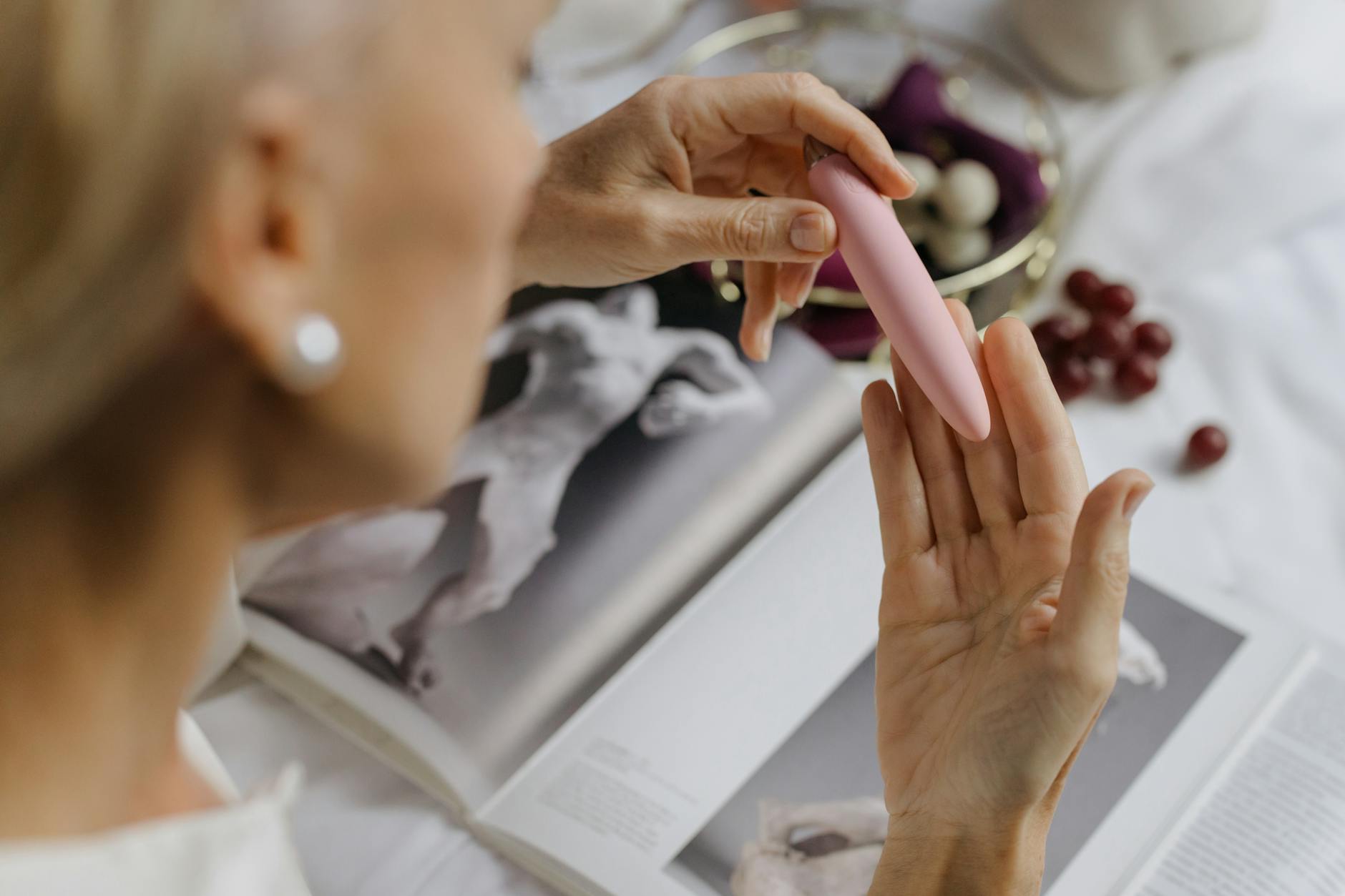
The Lem clitoral vibrator, and air-suction models like it, work on a completely different principle. Instead of vibration, they create a gentle vacuum and release pattern. This stimulates nerve endings through suction, not friction. The sensation is deeper, more focused, and it doesn't trigger the same habituation response that traditional vibrators do.
Why? Because your nerves haven't adapted to suction the way they've adapted to buzz. It feels novel. It feels different. That novelty matters for waking up sensation.
Your clitoris extends way further inside your body than most people realize. What you see externally is about one-third of the structure. The rest branches inward, toward the vaginal opening and upward around the urethra.
Traditional vibrators mostly stimulate the external glans. They're applying force to the surface. Suction reaches deeper into the tissue because it's creating a pressure differential. The clitoris is literally being drawn into the chamber while you're using it. This engages more of the internal clitoral network.
For people experiencing numbness, this deeper engagement often reawakens sensation that surface vibration alone can't touch. You're not just stimulating the same nerves in the same way. You're recruiting nerves that have been quiet.
If you're coming to a lemon vibrator after years of traditional vibrator use, start conservatively. Your instinct will be to jump to high intensity settings because you're used to needing that to feel anything. Resist that impulse.
Begin at setting one or two. Spend at least five to ten minutes at the lowest intensity before moving up. This trains your nervous system to recognize and appreciate subtle sensation again. It's relearning. You're essentially saying to your nerves, "Wake up. There's something to pay attention to here."
Position matters more with suction devices than it does with traditional vibrators. The Lem needs good contact. If you're sitting in a position where your thighs are tense or clenching, the seal breaks and the effect disappears. Lie back. Spread your legs. Let your pelvic floor relax completely. Some people find that placing a pillow under their hips angles things better.
The rhythm is also different. With a traditional vibrator, you're used to holding it in one spot and letting it do the work. With the Lem, small movements matter. Tiny circles, slight repositioning as you move through intensity levels. You're not just passively receiving sensation. You're actively exploring your own responsiveness.
Don't expect fireworks on day one. Sensation restoration takes time. But most people report that within a few sessions, numbness starts shifting. What felt muted becomes clearer. What took extreme intensity before starts working at moderate levels.
Here's something most guides skip: half the reason sensation goes numb is because you've stopped believing pleasure is available to you.
Maybe your partner doesn't prioritize your pleasure. Maybe you've internalized the message that wanting intense sensation is selfish or wrong. Maybe you've spent so long accommodating someone else's needs that you don't even know what you want anymore. That psychological guardedness creates a wall between you and your own body.
No vibrator, no matter how good, works through that wall by itself.
Using the Lem effectively when you're dealing with numbness means also doing the inner work. Set aside time when you're not trying to reach a goal. Exploration, not performance. Touch yourself without the expectation that anything particular needs to happen. Let sensation return on its own timeline.
If you're using the Lem with a partner, communicate about what you're trying to do. "I want to wake up my sensation again. It might take some time. That's the goal, not to reach orgasm tonight." Partners who understand the mission stop pushing for performance and start supporting recovery.
Sometimes numbness isn't really about sensation at all. It's depression. It's disconnection from your body because of trauma. It's the aftermath of a relationship that didn't feel safe. It's burnout so severe that pleasure isn't even on your radar anymore.
In those cases, a vibrator is one tool, but it's not the whole answer. A therapist, particularly one trained in somatic therapy or trauma-informed care, might be what actually helps. I've seen people invest in the best toys and see no change because the real issue was in their nervous system's threat response, not in their clitoris's hardware.
If you've been using the Lem consistently for a month and nothing's shifted, talk to someone. Rule out thyroid issues, hormonal imbalances, medication side effects, and unprocessed emotional stuff. Sometimes your body is telling you something that pleasure toys can't fix alone.
Second, address the basics. Are you drinking enough water? Are you sleeping? Are you managing stress? These aren't sexy answers, but they're foundational. Dehydration alone can reduce sensation dramatically. Chronic sleep deprivation dampens arousal. Chronic stress keeps your nervous system in threat mode, which suppresses pleasure.
Third, change the context. If numbness shows up when you're with a particular partner or in a particular location, that's data. Your nervous system is telling you something doesn't feel safe, even if your conscious mind is trying to override it. Listen to that.
Fourth, explore timing. If you've been trying to feel pleasure when you're already depleted, shift the window. Morning instead of night. After a walk instead of after work. When you've had alone time instead of right after family time. Your responsiveness changes based on your overall state.
What makes air-suction clitoral vibrators different from traditional vibrators is that they let your body reset. You're not continuing down the same neurological path you've been on. You're creating a new pathway, with different sensation, different intensity patterns, different rhythm possibilities.
That reset is what wakes sensation back up.
You don't need to throw away everything you've learned about your pleasure. You're just adding a new language for communicating with your body. And for people experiencing numbness, that new language often becomes the breakthrough.
Start low. Stay patient. Trust that sensation returns. It always does, once you give your nervous system permission to feel again.
No. Sensation isn't permanently lost, though it can take time to return, especially if it's been fading for years. The clitoris has thousands of nerve endings that are still there and still functional. What changes is how responsive they are. That responsiveness can be rebuilt with the right approach, the right tool, and the right emotional context. Sometimes it takes weeks. Sometimes months. But it comes back.
Most people find suction-based stimulation more effective than traditional vibration for waking up sensation, but not everyone. If numbness is rooted in trauma, depression, or a relationship dynamic that doesn't feel safe, a vibrator alone won't fix it. You might need therapy first, or alongside toy use. If it's medication-related, a conversation with your prescriber might be necessary. The Lem is a tool that works better for some causes of numbness than others.
For people switching from traditional vibrators to air-suction models, most report noticeable changes within one to three weeks of consistent use. For people dealing with more complex numbness rooted in stress, relationship issues, or hormonal changes, the timeline is longer and less linear. You might feel sensation return one day and disappear the next. That's normal. Keep going anyway.
No. Numbing products reduce sensation further, which is the opposite of what you want. If sensation is already dull, making the area less sensitive won't help. What actually helps is waking up your nervous system's responsiveness through novelty, technique variation, and emotional safety. That's the opposite direction entirely.
No. High intensity is what you need when your body has adapted to the same stimulus. Restored sensation is when you feel pleasure at lower intensities again. If you used to need a setting of 9 to feel anything, and now you feel plenty at a setting of 4, that's restored sensation. That's the goal. High intensity without restoration is just chasing a stronger buzz.
That's really important data. If you can feel sensation easily on your own but not with your partner, your nervous system is telling you something about safety or emotional presence. Maybe you're anticipating judgment. Maybe you're focused on their pleasure instead of your own. Maybe there's an old hurt that makes you protect yourself. A therapist can help you explore that. Sometimes it's a relationship issue that needs conversation. Sometimes it's a personal protective response that needs rewiring. Either way, the numbness isn't about your body's capacity. It's about context.
Numbness is a signal, not a sentence. Your body is responsive. Your clitoris still works. Your nerves are still there. What's changed is the dialogue between your mind, your nervous system, and your physical sensation. And that dialogue can absolutely be rebuilt.
If you want to explore how the Lem works for numbness or reduced sensation, start with the basics: low intensity, patient exploration, and emotional safety. Your pleasure matters. And it's still waiting for you on the other side of numbness.