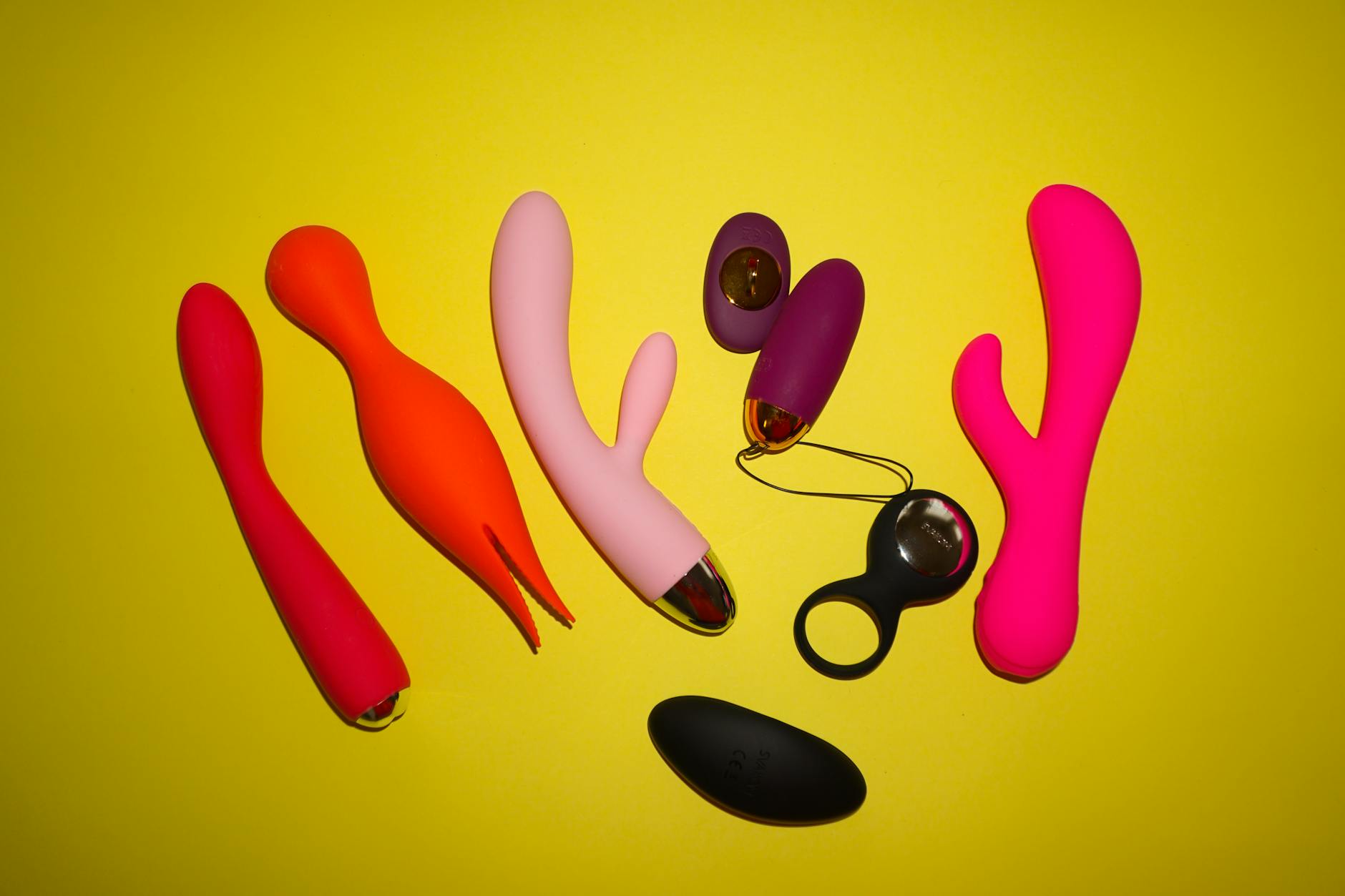
How to Use a Lemon Vibrator When Orgasms Feel Less Intense Than Before
Orgasm intensity shifts naturally. Here's what dulls the sensation, why you're not broken, and how the right approach with a lemon vibrator can help rebuild what felt lost.
Your orgasms used to hit differently. You remember the feeling. And now they feel softer, quieter, or just... less. That shift is real. It's also not a problem you need to solve by white-knuckling your way through self-blame.
Orgasm intensity isn't fixed. It changes across your lifespan, across cycles, across relationships, and across seasons of your own body. What feels muted right now doesn't mean you've lost capacity for pleasure. It means something in the equation shifted, and once you know what, you can actually work with it instead of against it.
Let's start with physiology because it matters and it's not depressing once you understand it.
Orgasm involves three main players: blood flow to the genitals, nerve sensitivity, and your pelvic floor muscles contracting in rhythm. When intensity feels lower, it's usually because one or more of these isn't firing at full capacity. Most commonly, it's a combination.
Hormone changes are the biggest culprit here. Estrogen and testosterone both affect blood flow and nerve responsiveness. If you're in perimenopause, on hormonal birth control, recovering from pregnancy, or dealing with thyroid shifts, your hormone profile has changed. That's not weakness. That's biology. Your body is different, not broken.
But here's what people miss: reduced sensation can also come from attention. Seriously. If your brain is split between work stress, relationship stuff, physical discomfort, or just fatigue, your nervous system doesn't have bandwidth to register subtle pleasure. You need more intense input to break through the noise. That's not malfunction either. That's neurology.
The third factor is pelvic floor tension. Counterintuitive, but hear me out. Chronic tension in your pelvic floor (from sitting all day, holding stress, past trauma, or just time) actually dampens sensation. A tight muscle can't contract with the same amplitude as a relaxed one. So sometimes lower orgasm intensity means your pelvic floor is working too hard just to exist, and there's no room for the rhythmic contractions that make climax feel explosive.
The design of lemon vibrators matters specifically for this problem.
Most traditional vibrators rely on rapid vibration alone. That works fine when your nerve endings are firing at baseline. But when sensitivity is muted or attention is fragmented, you need a different stimulus pattern. That's where suction technology shifts everything.
A lemon vibrator uses gentle suction combined with pulsing sensation. Instead of direct friction (which can feel overstimulating or numb-making on less-responsive tissue), suction draws tissue into the chamber and stimulates the entire clitoral structure at once. It's more surface area of nerve activation with less direct pressure. For people experiencing reduced intensity, that often translates to deeper, more diffuse sensation that builds differently.
The other advantage is the sensation variety built into most lemon vibrators. You can shift between patterns, intensities, and durations in ways that keep your nervous system engaged. When intensity has dulled, having tools that let you explore novel patterns can actually retrain your body's response. Your brain gets bored with the same input. Variation resets the system.
This is where most people go wrong when sensation has shifted.
If your orgasms feel less intense, your first instinct might be to jump straight to the strongest sensation available. Please don't. That actually trains your nervous system to need more and more to get any response at all. It's the opposite direction.
Instead, budget real time for buildup. I mean 20 to 40 minutes before you even touch the lemon vibrator. Here's why: arousal isn't just about feeling sexy. It's about activating the parasympathetic nervous system, increasing blood flow to the genitals, and literally engorging clitoral tissue so it's more responsive. That takes time, especially if stress, hormones, or tension have been your baseline.
Start with low-intensity patterns on the lemon vibrator. Let your body adjust. Pay attention to what patterns create the first signs of sensation rather than trying to force an orgasm. Most people rediscover intensity when they stop chasing it and start exploring it.
Here's something almost nobody talks about: you might need to learn how to relax your pelvic floor before you can have a more intense orgasm.
If your pelvic floor is chronically tight (and it usually is if you sit a lot, have chronic pain, anxiety, or any history of sexual tension), it's like trying to have an orgasm with the brakes on. The muscles literally can't move through their full range of contraction. The sensation feels shallow or incomplete.
Before you use a lemon clitoral vibrator, try this: spend 5 minutes just breathing into your pelvic floor. Imagine the area between your anus and genitals as a knot you're slowly untying. Breathe in, let the muscles slightly contract. Breathe out, let them drop. That's it. Do this lying down, hips supported.
During actual pleasure time with the vibrator, check in: are your glutes clenched? Are you gripping? Can you consciously soften your belly, your butt, your thighs? Most people hold these muscles tight during sex out of habit or anxiety. Releasing that tension completely changes the sensation because now your pelvic floor can actually move freely.
Orgasm intensity can actually be rebuilt through deliberate exploration.
When sensation has flattened, using the same exact approach every time teaches your nervous system that this input is boring. Your brain adapts. Newsflash: that's literally the definition of habituation. The solution is novelty.
With a lemon vibrator, that means experimenting. Try different patterns. Change the angle. Vary the pressure. Some days maybe you start with a low pattern and gradually increase. Other days maybe you skip the buildup and start at medium. Maybe one week you focus purely on clitoral stimulation, and another week you bring in partner touch or penetration alongside the vibrator.
The goal isn't orgasm per se. It's creating enough variability that your nervous system stays engaged and your body doesn't settle into "this sensation means nothing." When you introduce real variety, intensity often returns naturally because your system is actually paying attention.
If everything else is fine but your orgasms still feel muted, hormones might genuinely be the limiting factor.
Don't try to self-diagnose. Talk to a gynecologist or hormone specialist, especially if reduced intensity came alongside other shifts like mood, energy, sleep, or lubrication changes. Low thyroid, low estrogen, low testosterone, or blood sugar dysregulation can all flatten sensation. The lemon vibrator can't fix a hormone deficiency, but knowing you have one means you can address it directly while still using tools like the vibrator to rebuild your responsiveness as hormones rebalance.
If you're on antidepressants, ask your prescriber whether intensity shifts are a known side effect and whether timing or dose adjustments might help. Sometimes that simple conversation opens up options.
Here's what I tell people when they feel disconnected from their own orgasmic response: the intensity isn't gone. Your nervous system just needs permission to slow down and pay attention.
This is where intention matters as much as the tool itself. Using a lemon vibrator while still operating in rush mode, still stressed, still dissociated from your body? That won't work. Using it as part of genuine self-care, with time carved out, with your mind actually present? That changes everything.
Some people rebuild intensity by dropping the pressure to orgasm at all and just exploring sensation for weeks. Some people find intensity returns instantly once they address underlying stress. Some people discover that "less intense" is actually just "different" and they learn to appreciate a longer, more diffuse kind of climax over the sharp peaks they used to chase.
None of these outcomes are wrong. All of them involve the same basic principle: using a tool like a lemon clitoral vibrator intentionally, with knowledge of what's actually happening in your body, and with patience while sensation recalibrates.
Age, hormonal cycles, relationship dynamics, stress levels, sleep quality, and physical activity all affect arousal and orgasm intensity silently. Sometimes there's one clear cause. Sometimes it's a combination. The absence of an obvious "reason" doesn't mean nothing changed. Your body is always responding to its environment. If intensity has shifted, something in your nervous system, hormones, or pelvic floor tension has shifted too. That's not mysterious or broken. That's just how bodies work.
Depends on the underlying cause. If the issue is sensation dulling from stress or attention, the lemon vibrator can absolutely help restore responsiveness because the suction pattern is novel and engages your nervous system differently. If the issue is hormone-related, the vibrator won't fix the deficiency, but it can help rebuild your capacity to respond to stimulation while you address hormones separately. If it's pelvic floor tension, the vibrator is helpful, but pelvic floor relaxation work is essential. Best approach: use the vibrator as one part of a broader strategy, not the only intervention.
Weeks, not days. If you've had muted sensation for months, your nervous system has adapted to that. Rebuilding responsiveness takes consistent, intentional practice. Some people notice shifts in just a few sessions once they change their approach fundamentally. Others need sustained practice over 4-6 weeks. The fact that change isn't instant isn't a sign it won't happen. It's a sign that real neurological adaptation takes time.
Not necessarily. In fact, jumping to higher-intensity vibrators often makes the problem worse by training your nervous system that only extreme input registers. Better approach: stick with moderate intensity while addressing pelvic floor tension, stress, and warm-up time. Often intensity returns without ever increasing vibrator power because the real bottleneck was elsewhere. If you do eventually use a stronger vibrator, it should be after you've built back sensitivity with a lemon vibrator, not as a substitute for that work.
Yes, but not the way most people think. Partner involvement helps most when it's about presence and attention, not about "adding stimulation." Some people find that having a partner present while they explore with a lemon vibrator actually helps them stay focused and present, which itself restores intensity. Others find they need solo exploration first to rebuild confidence and sensation before bringing partner attention back in. The key is talking about what helps you feel present, not just what feels physically intense.
Yes, if after 6-8 weeks of intentional practice with these strategies your sensation hasn't shifted. A pelvic floor physical therapist can assess whether tension is the limiting factor. A gynecologist can check hormone levels. A sex therapist can help if the issue is psychosomatic (anxiety about intensity itself becoming the blocker). Often the answer is a combination, and specialists help you figure out which piece matters most for your specific body.
When orgasms feel less intense, the instinct is usually to push harder, chase stronger sensations, or assume you're broken. None of those directions work. What actually works is what feels counterintuitive: slowing down, building intentionally, understanding what changed, and using tools like a lemon vibrator in a smarter way.
Intensity doesn't stay the same across your lifespan. It fluctuates. Sometimes it's muted. Sometimes it roars back. The skill is learning to work with what's actually happening in your body right now, not trying to recreate what used to happen. Once you do that, intensity often returns. And sometimes you discover it was never actually gone. You were just looking in the wrong place.