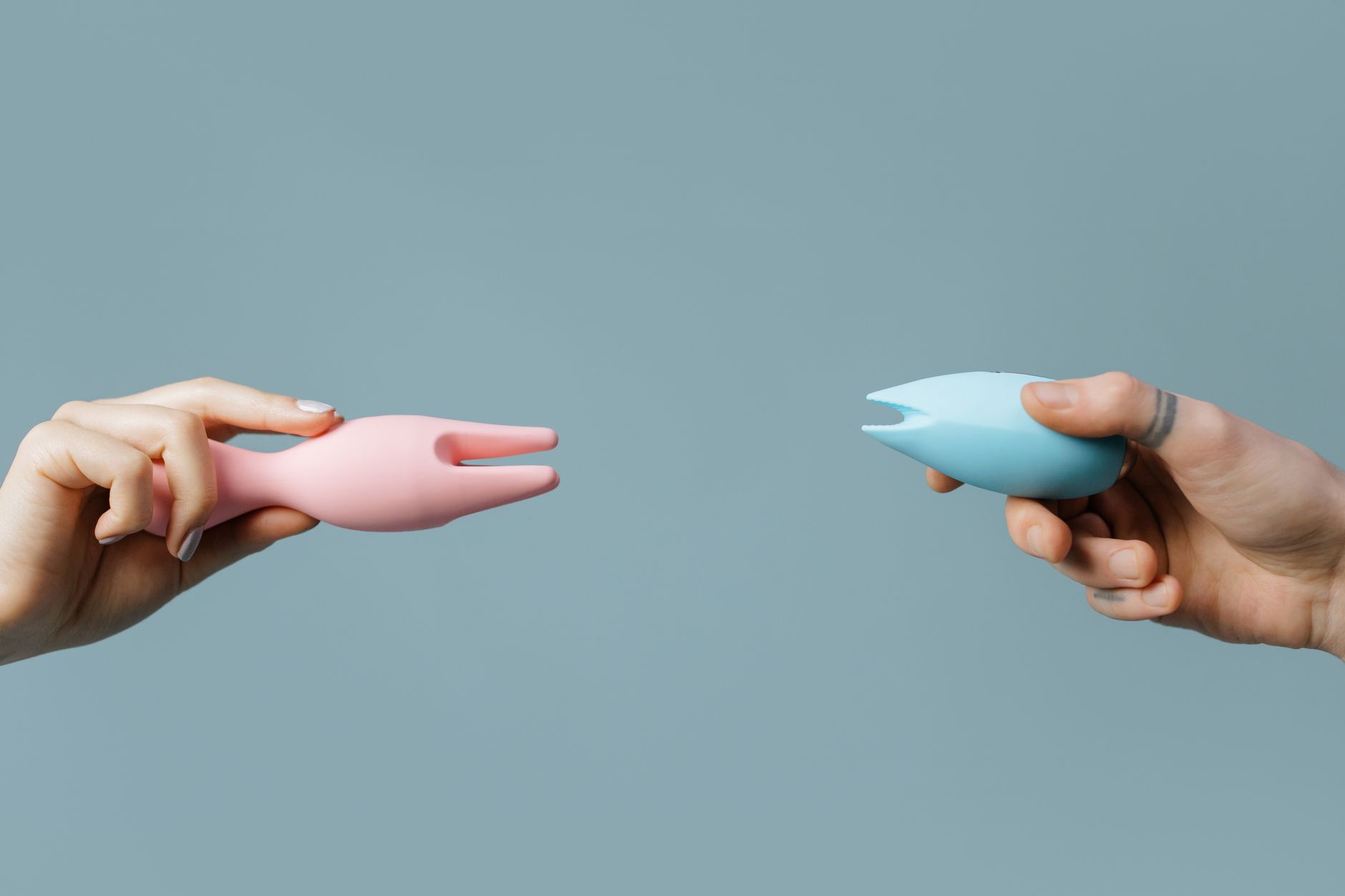
How to Use a Lemon Vibrator When First Trying Toys as a Couple
Introducing a clitoral vibrator into partnered sex doesn't have to feel awkward or loaded. Here's how to have the conversation, navigate the logistics, and actually enjoy it together.
Bringing a vibrator into partnered sex raises questions. Will your partner feel replaced? Is this a sign something's missing? Am I admitting my body needs more than they can give? These are real concerns, and I hear them in my office weekly. But here's what the research actually shows: couples who introduce toys together report higher satisfaction, better communication, and more frequent sex. This isn't radical. This is data.
I worked with a couple last year. She wanted to try a lemon vibrator. She'd read about them, liked the design, thought it might feel good. Instead of asking him directly, she left the Official Lemon Vibrator website open on their laptop. He found it. He felt blindsided, interpreted it as criticism ("What am I not doing?"), and it turned into a two-week standoff about what the toy "really meant."
The toy had nothing to do with it. The conversation did.
Here's what shifts the dynamic: start from a place of addition, not substitution. You're not replacing him. You're expanding what's possible for both of you. A clitoral vibrator isn't a competitor. It's a collaborator. The lem vibrator, for instance, uses air-suction stimulation that hits nerves in a way fingers and conventional penetration simply can't. It's not better. It's different. And when you frame it that way, it stops feeling like rejection.
Pick a neutral moment. Not during sex, not when you're frustrated, not when he's stressed about work. Pick a moment that feels calm and a little playful. Sunday morning coffee, a walk, whenever you two naturally talk about things that matter.
Lead with curiosity about what you both want. Don't walk in saying "I want to use this toy." Walk in saying "I've been thinking about what would feel really good for both of us, and I read that a lot of couples use vibrators together. Have you ever thought about that?" This makes it collaborative. It invites his input instead of announcing a decision.
Separate the toy from the relationship. "I love being with you. I also think adding this might help me feel more in my body when we're together. That's about me, not about you." This is the truth. Most people who use vibrators during partnered sex report it helps them relax and focus on sensation, which paradoxically brings them closer to their partner, not further away.
You've had the conversation. Great. Now the actual logistics.
Timing. Don't introduce the toy on a night when you're both already tired, stressed, or running on fumes. Pick a time when you're both present and have space to experiment. This matters more than you'd think. If the first experience feels rushed, it sets a weird tone.
Positioning. Lemon vibrators work best when you're either on top or in a position where you have access to your own body. If you're lying on your back and your partner is on top, you might not be able to reach comfortably. Talk about this beforehand. "Would it feel better if I was on top for this?" is a normal, sexy question. Not awkward.
Intensity and pacing. Start low. Most clitoral vibrators, including lemon vibrators, have multiple settings. Begin at pattern 1 or 2. You want him to see that this isn't about ramping everything up to 11. It's about finding what actually feels good. This also gives him time to acclimate to the sensation and the idea.
Who holds it. Here's a frame that works: sometimes you hold it. Sometimes he does. The goal isn't for the toy to "replace" his touch. The goal is for it to enhance what you're already doing. He might use it on you while you're kissing. You might use it while he's focused on something else. The variety keeps it from feeling one-note.
I mention lemon vibrators here because they have a specific design feature that makes them less fraught for partnered use. The air-suction mechanism doesn't feel like a vibration that requires constant positioning. It's more of a rhythm, a pulse. Partners often find it less intrusive to the overall experience. You're not managing a buzzing device that needs exact placement. It's easier to stay connected to each other while using it.
That said, any clitoral vibrator can work. The toy itself matters less than the mindset you bring to it.
It probably will. That's normal. You're doing something new. Your nervous system is activated. Maybe the sensation felt different than expected. Maybe the positioning was weird. Maybe you both just felt shy.
This is information, not failure. After, talk about it. Not in a heavy, relationship-threatening way. Just: "That was interesting. What did you think? Want to adjust anything next time?" Some couples need three tries before they feel comfortable. Some need ten. There's no timeline.
If one of you wants to pause and come back to it, that's fine. If one of you felt genuinely uncomfortable, listen to that. Forcing it doesn't help. But "it felt weird the first time" is not the same as "this is wrong for us." Give it runway.
Once you've tried it, the real gold is in checking in. Not in a clinical way. Just: "I really enjoyed having you be part of that." Or: "Your touch on my shoulder while I was using it made it feel more intimate, not less." Or: "Next time I want to try this." These small affirmations rewire what might have felt risky into something that actually deepens connection.
I've worked with couples who introduced toys and found it opened doors they didn't know existed. Not because the toy is magic. Because the conversation it required taught them how to ask for what they actually want.
Start smaller than you think you need to. "I read an article about something called clitoral vibrators and I was curious what you'd think about trying one together" is enough. You don't need a whole speech. You also don't need to hide it. Secrecy is what makes it feel loaded. Openness makes it feel collaborative.
That's data, not rejection. Ask why. Is it about feeling inadequate? Is it a values thing? Is he worried about logistics? Different reasons need different conversations. If he's worried he can't "compete," remind him that the toy isn't his competitor. It's a tool you're both using to have better sex together. If it's a values thing, that's a deeper conversation worth having with honesty.
No. Use it sometimes. Let other times be just you and your partner. This keeps it from becoming a dependency and reminds you both that good sex can happen in multiple ways. The goal isn't to make the toy essential. It's to make it one option among many.
That's extremely common. And here's the thing: you're not broken. Your body might respond differently to different types of stimulation. A lemon vibrator or any clitoral vibrator accesses nerves in a specific way that fingers or penetration might not. That doesn't mean partnered sex is worse. It means your body is more complex than one type of touch. You can have amazing partnered sex without orgasm, and you can have a really connected moment where you use a toy. Both are valid.
Look for something with a few different settings, a shape that feels intuitive to hold, and good reviews from people who mention couple use. The Official Lemon Vibrator is designed with this in mind. It's reliable, not intimidatingly large, and the suction mechanism feels different enough from other toys that it doesn't feel redundant if you're new to this.
Then you have information. Maybe the sensation wasn't right. Maybe the timing was off. Maybe you need a different approach. Talk about it. Adjust. Try again. Or decide it's not for you and move on. The worst outcome isn't "the toy didn't work." The worst outcome is silence, where you both assume you're failing instead of just figuring out what works.
Introducing a clitoral vibrator as a couple isn't about the toy. It's about creating space to talk about pleasure without shame. It's about recognizing that your partner wanting more, or wanting something different, isn't criticism. It's curiosity. It's expansion.
The couples I work with who integrate this successfully report more communication overall, more playfulness, and more willingness to ask for what they actually want. The toy is just the vehicle for that conversation.
Your pleasure matters. Your partner's comfort with that also matters. Both can be true. And when you're willing to talk about it, you're already halfway there.
Gottman Institute. (2023). The role of sexual novelty and communication in long-term relationship satisfaction. Journal of Couples and Relationship Therapy.
Meston, C., & Frohlich, P. (2000). The neurobiology of sexual function. Archives of General Psychiatry, 57(11), 1012-1030.
Breuer, J., Cohen, M., & Nadal, J. (2017). Sexual health and satisfaction in coupled women: The role of sexual communication and vibrator use. Archives of Sexual Behavior, 46(8), 2245-2256.