How to Use a Lemon Vibrator After Stopping Antidepressants
Sexual sensation returns on its own timeline. Here's how to reintroduce a lemon clitoral vibrator safely, what to expect during the transition, and why patience matters more than intensity.
Here's what nobody tells you clearly: SSRIs and SNRIs save lives. They also flatten arousal, delay or block orgasm, and sometimes make the whole thing feel numb. And then when you stop taking them, sexual sensation doesn't immediately snap back like a rubber band. It rewires itself slowly, unevenly, and sometimes in ways that surprise you.
I work with clients navigating this transition constantly. The pattern is always the same: relief mixed with confusion, because your body is waking up again but your brain hasn't caught up to what that means.
Antidepressants work by increasing serotonin availability in your brain. That's brilliant for mood stability. It's also why your genitals feel like they're on mute. Serotonin affects dopamine pathways that drive arousal. It changes how your nervous system prioritizes pleasure signals. It can make orgasm feel distant, muted, or simply impossible.
About 40 to 60 percent of people on SSRIs experience some form of sexual dysfunction. That's not a character flaw or a sign you're broken. It's a well-documented neurochemical trade-off.
Here's what's important: the sexual side effects were never about your capacity for pleasure. Your nerve endings still work. Your brain can still experience arousal. Your clitoris didn't forget how to respond. The medication just turned down the volume on all the neural pathways that would normally light up during sex.
When you stop SSRIs, arousal and sensation don't return on a fixed schedule. Some people notice shifts within days. Others take weeks. A few take months. The variability is normal.
What typically happens:
Weeks 1-2: You might feel restless, slightly more aware of physical sensation, or emotionally volatile. Sexual response is still muted.
Weeks 2-4: Arousal begins to creep back. It feels strange at first, like waking up a limb that's been asleep. Your brain might feel overstimulated even when your body is just beginning to respond.
Weeks 4-8: Most people notice a significant shift. Orgasm becomes possible again. Sensation sharpens. You might also experience some emotional intensity as your nervous system recalibrates.
Weeks 8-12: Pleasure usually stabilizes into something new. It won't feel identical to pre-medication pleasure because your nervous system has changed. It's often described as richer, slower to build, or sometimes more intense.
This timeline varies wildly. Work with your prescriber if you're concerned about the pace.
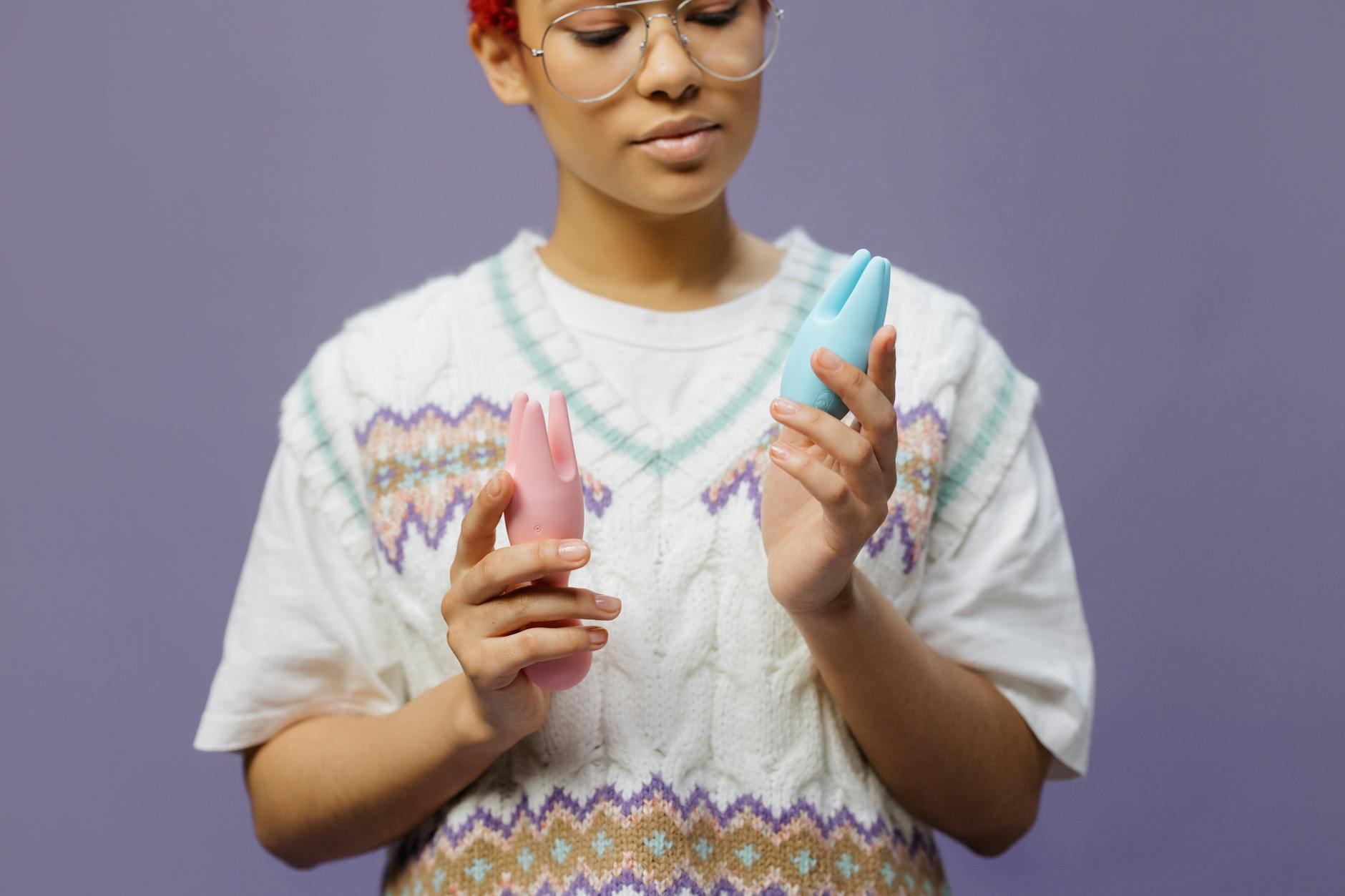
Clitoral suction devices like the Lemon work differently than traditional vibrators. Instead of relying on sustained vibration against tissue, they create a gentle rhythmic suction that stimulates the clitoral cluster without direct pressure.
Why this matters during sexual rebound: Your nervous system is hypersensitive right now. A standard vibrator can feel overwhelming. The Lemon's graduated intensity settings let you start at pattern 1 (the gentlest pulse) and work up at your own pace. You're not forcing sensation. You're inviting it.
Lemon clitoral vibrators also deliver consistent, predictable sensation. When your arousal system is rebooting, that predictability matters. You know what setting 2 will feel like. You can build a map of your own pleasure without surprise or jarring intensity.
Many clients tell me they use a lemon sexual toy during this phase not because they want intense orgasms but because the tactile feedback helps rewire the connection between physical sensation and arousal.
Week 1 of the transition: Solo exploration without any toy. Warm baths, touch, whatever feels good. You're reacquainting yourself with sensation. This isn't about orgasm. It's about noticing when your body feels responsive.
Week 2-3: Introduce the Lemon on the lowest settings (patterns 1 and 2). Apply it for short bursts of 30 seconds to 2 minutes. The goal is gentle stimulation, not climax. You're signaling to your nervous system that pleasure is safe again.
Week 3-4: Increase time to 5-10 minutes if it feels good. Still keep the intensity low. If a pattern feels too intense, drop back. Your baseline has shifted. What felt mild before might feel strong now.
Week 4 onward: Gradually explore higher patterns as arousal builds naturally. Some people find they prefer staying on lower settings permanently. That's perfectly fine. The Lemon's strength is that it works across all intensity levels.
Use water-based lubricant if your tissue feels dry. Medications also affect natural lubrication, and that can take time to return.
Here's what catches most people off guard: your body's coming back online, but your mind sometimes lags. You might feel:
Grief over lost time. If you were on SSRIs for years, you lost years of sexual experience. That's real.
Anxiety about whether pleasure will ever feel the same. It won't. It will feel like a new version of pleasure, which can be either disappointing or liberating depending on the day.
Confusion when arousal suddenly shows up in unexpected moments. Your nervous system is recalibrating sensitivity thresholds. That's not chaos. That's healing.
If you're in a relationship, your partner might feel confused too. They may have gotten used to lower sexual frequency and assume you're suddenly interested in more. Communicate clearly: "My body is adjusting. I'm not sure what I want yet. Let's be patient."
If sexual sensation has completely flat-lined after 12 weeks of being off medication, tell your prescriber. Sometimes the issue isn't the SSRI itself but an underlying condition (hormonal imbalance, thyroid dysfunction, depression symptoms returning). Getting evaluated matters.
If sensation returns but brings pain, don't wait. Talk to your gynecologist. Medications can affect vaginal tissue health, and post-SSRI vulvovaginal pain is treatable.
If you feel emotionally unstable during the rebound period, especially if depressive symptoms are creeping back, that's also a conversation worth having. Coming off SSRIs can be medically complex. You deserve professional guidance.
One last thing: sensation often returns unevenly. You might notice your clitoris responding but have trouble with deeper arousal. Or arousal might spike but orgasm still feels distant. This fragmentation is normal during rebound.
That's actually where a lemon clitoral vibrator is particularly useful. You can focus on what's working right now without waiting for the whole system to be online. You can experience pleasure in pieces and let those pieces integrate over time.
Take the pressure off your orgasm. The goal during this phase isn't climax. It's reconnection. Every moment of sensation is a win.
You can introduce a vibrator as soon as you feel emotionally ready, typically around week 2-3 of discontinuation. Start with the gentlest settings. There's no physiological danger in using a lemon clitoral vibrator, but your nervous system might feel overstimulated if you jump straight to high intensity. Let arousal rebuild gradually.
No. But often better. Many people describe post-SSRI orgasms as slower to build, more located in specific areas, or emotionally complex in interesting ways. Your nervous system has changed. That doesn't mean it's worse. It means you're learning yourself again.
Yes, but be gentle with yourself. If you're feeling depressed, anxious, or emotionally volatile, solo pleasure can actually be grounding. The Lemon's gentle suction can feel soothing rather than stimulating. Use it as self-care, not performance pressure.
Most people say yes. Antidepressants often suppress natural lubrication, and it takes time for that to return. Water-based lube makes the Lemon's suction feel more comfortable and helps you focus on pleasure instead of dryness.
Then you're not ready, and that's okay. Sexual rebound isn't mandatory. Some people notice arousal returning quickly. Others take months. Some realize they're just not interested in genital pleasure right now, and that's valid. A lemon sexual toy is there when and if you want it.
If you're in a relationship, honesty helps. You might say something like: "My body is waking up sexually, but I need to understand what's happening for me first. I'm going to do some exploring on my own for a bit. This isn't about you." Most partners appreciate clarity over mystery.
Your sexual rebound doesn't belong to anyone but you. You deserve space to rediscover your own pleasure without pressure or performance anxiety. That's when a lemon clitoral vibrator becomes most useful.